Wednesday, November 30, 2016

Homelessness

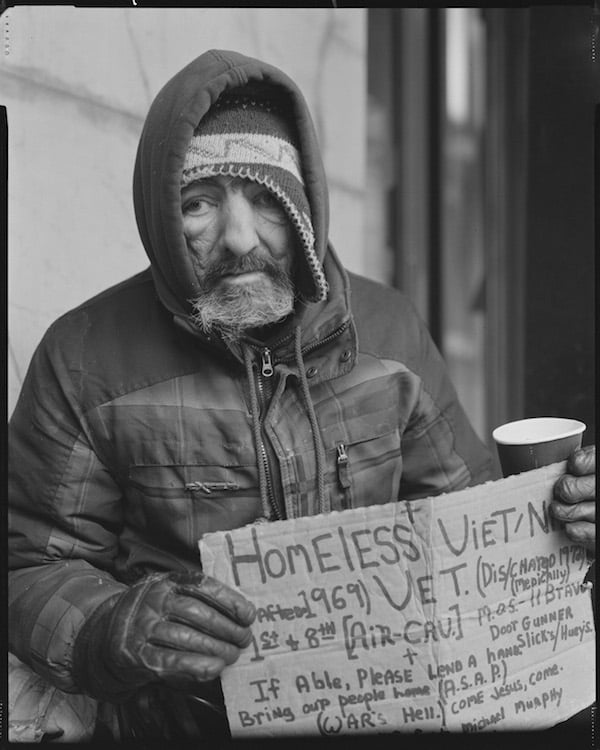
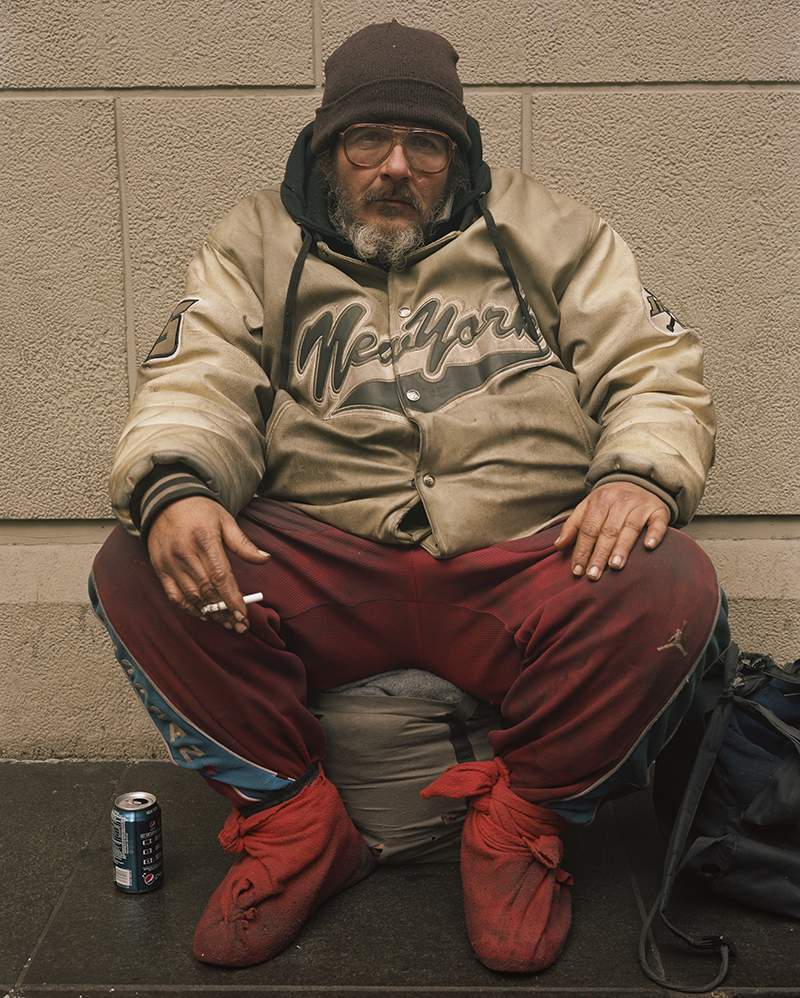
     In today's society everywhere we look we see growing crime, prejudice and social and political injustice. One thing we see everyday walking around in our city especially is homelessness. In recent statistic studies there are totalled over 564,708 homeless people in which 50% of them have been over the age of 50. Due to being homeless for long people tend to grow mental illness and diseases while being alone on the streets, it can drive someone to be crazy.
Over years people Just learn to make them part of society and just walk over them as if they are not there, straight up ignore the existences of a human being. As we are noticed in our everyday lives of people  in society I feel as if homeless people  do not get this same "privilege" as us "normal" citizens do. All they want to feel is cared for, some of us look at homeless people as if they are scary as if they are not humans like us. There has been many artist in which have made impact touching on topics including homelessness, one of the main is Krzysztof Wodickzo. Although known for many of his projects the one I would like to focus on is the Homless vehicle he made.

    This vehicle was something to help homeless people survive on the streets. The wagon type silhouette served as many different things to these homless people, first off it extended into a bed for the people to sleep on at night, second off the bottom of the cart had a section for someone to store cans and other things they needed to build up.
Also the vehicle had a compartment which came out and give you a platform to wash ur head and hair in. Nevertheless the reason this was so impactful and so important is because this  project did for homeless people something they never had before, people turning and looking at them, drawing them attention, making it so that they are seen as people just like everyone else. Wodickzo addressed this issue of homeless people being unseen by making something that is very easy to the eye. Another person who made something similar to help homeless people recently is a young woman, 15 years old, by the name Emily Duffy, a student at Desmond college in Limerick. She developed a fireproof and rainproof sleeping bag with Velcro straps just incase the person had to get out of the sleeping bag quickly. She recently showed this project off at the BT Young scientist and technology exhibition in Dublin.

 One of the most known artist in this genre and notable is Michael Rakowitz. He created a project named the "parasite". This was a tent like structure built from inflatable plastic bags. This structure would attatch to the exterior outtake vents of buildings, these blew hot air into the structure which would then give people an insulated tent to sleep in. Although it broke some laws it still made its impact while people were using it.
Rakowitz gave people a harsh taste of reality of how hard it is for homeless people during the winter. The parasite was only distributed to 30 people ranging from Boston to New York City. All three of these artist are to me examples of activism in art, they make something to show people and reach different artist. Activism in art paints pictures for people and let's threm the audience think what they want about the project, paint their own picture, make their own meaning of it. On the other side activism is politics can lead to worse stuff. For example our recent presidential debate led to more segregation than maybe ever. Also not to mention all the riots and violent protest which followed the outcome of the election. Activism through art is a real way of a peaceful protest, it gives people an opportunity to think for themselves instead of getting consumed into what media spits at them.


Links and resources for project

Artists fighting for the homeless

Rachel George
The Guerrilla Girls asks,"What's the difference between a prisoner of war and a homelessness person?" A homeless person sleeps on hard concrete every night. They have to fight to stay warm and safe at night. Also they wear the same outfit for many days until they can get new ones. A homeless person is a prisoner of war in their own city. Many people do not understand why people become homeless; it could be because the person is out of work or their rent is to high to pay. Today, the housing market has increased, but a persons salaries did not. But artists like Krysztof Wodiczko, Michael Rakowitz, N55, and Andres Serano changes poor people and fortunate people lives with their projects.

People who lose their home might use their car for shelter. Wodiczko was able to create the Homeless Vehicle which was "an  instrument of survival for urban nomads"(26). He created this vehicle with a shopping cart as a shelter so the unfortunate do not have to stay so the unfortunate do not have to stay in one place. Similar to Wodiczko project, his former student, Rakowitz created the paraSITE. This project is "Produced from plastic bags and tape and attached to air vents on buildings"(34). Heat is one of the major problems homeless people have to deal with. Rakowitz project kills two birds with one. Instead of the heat coming out the through the vents going out into the air he attaches plastic bags to the open air vent. Both Wodickzo and Rakowitz used simple materials to help many in need.

A studio apartment in Manhattan may cost up to $3,000.  This same $3,000 you pay every month could be used as a down payment to a payment for people who does not have to worry about becoming homeless because you are not able to pay. The Snail Shell System was a mobile home shaped like a wheel "equipped with air intake valves,... a kitchen pan, kettle, alcohol burner and plastic bags, a pump and a toilet"(60). Why pay for a small apartment you probably are struggling to pay. N55 shows us that you can use what you have to create something beneficial to help others.

An English idiom, a "Picture paints a thousand words." Serano went around New York City streets photographing destitute people he saw. The pictures show their struggles when living on the streets. But then he decided to change the way he captured a picture. According to Art about poverty and Homelessness, he wanted to focus "on personal connectivity and interaction directly." Serano wanted to get to know them and gain trust from the less fortunate. People who joined this movement felt "it is a blessing when someone takes time to interact with them and to acknowledge them as not being invisible." Many businessmen and businesswomen walk pass the homeless people as if they are not human beings and decided to become homeless. Serano allows us to think about ways we can help the homeless more rather than into their cup.

Activism in art and political activism has many similarities. Political activism is a large group coming together marching down streets with signs, chanting for change. In "Protest tackles homelessness", by Broke-Ass Stuart, today in San Francisco people protested to save the homeless people after "when Hizzoner Ed Lee said the ''homeless have to leave" for the Super Bowl". San Francisco is ignoring their own people. However, art activism is either a artist or artists using objects to display a message. For example, these Wodickzo, Rakowitz, N55, and Serano used their passion for art to design either a mobile or photographs to display the simple necessities they do not have. The homeless are people too. Many people become homeless due to losing their home, family issues or become mentally ill. These artists are able to share their stories with their creations. It will only grow if we as citizens continue to walk pass them.


Race and Art

Disclaimer: Before presenting my artists I will address why these artists are important in their field of activism and worth taking note of rather than incoherent babblings of a half-baked idea. In my descriptions of these projects I specifically point out those parts which I find useful and leave out parts that I believe have been diluted away from their original intention. The lack of coverage of these aspects comes from me personally not believing it to be useful not lack of research.


Racism, especially in policing is an issue that occurs due to a reason such as increased crime rates by certain race or ethnicity for the vast majority of occurrences. Racism is a problem even in America the most equal of diverse nations. My theory behind the lagging back and continuing of racism is that it stems from the wage gap. However we have come forward in strides the past century to make our fellow Americans equal in this field. In fact certain racial groups such as Asian Americans and Indian Americans are reporting higher earnings than Whites. The question is why have Indian Americans and Asian Americans progressed so far from the days of racial inequality that they faced when they were performing the most dangerous job of planting and detonating explosives for half the pay of the Hispanic workers. How and why were these racial groups progressing so far while Hispanic and Black people in the work force remained behind? In order to eliminate racism we should focus on what causes the increased rate of criminal activities in Hispanic and Black communities especially since the victims of these crimes tends to be someone of the perpetrator’s own race and therefore doubly sets that race back. This is the wage gap as someone who has money is less likely to commit a crime, especially violent ones than someone who doesn’t.

As previously stated the reason behind the racism in policing, the disparity between racial groups in regards to crime both stem from wage earnings in my opinion. In my researched opinion the reason behind the wage gap is the understanding and sympathy that the majority of people feel towards the race. I believe that in order to close the wage gap which is the source of these race problems we need to promote inter-racial understanding and break down those things that separate us. We should become the melting pot that America is thought to be in actuality. While allowing people to keep their racial identity and remaining respectful of it we must come to understand and accept it in all its detail. The three artists I have chosen are three that I feel do this in varying capacities.

William Pope L – Black Factory

The Black Factory is a van owned by William Pope L that goes to various art exhibits and displays a blow-up igloo of what he describes as Black-ness. This is meant to show people of other races what being black is like and therefore promote understanding between the races and work to bring us all together. William Pope L uses the igloo as his medium to communicate with his audience and engages the audience by popping up in a place that surprises them.

Ruben Ortiz Torres – Hats

Ruben Ortiz Torres is an innovative artists who employs a huge variety of means to deliver his message. Hats is my favorite example and it addresses not only his problems as a Mexican American by giving social commentary and promoting understanding of his and other races through racially charge hats but also addresses issues faced by Native Americans and other racial groups. Hats is my personal favorite project on race issues due to its creativity and the artistic eye grabbing form that it takes often with a clear message.

The public – Black Lives Matter


This project is one that I am both critical of and support. Due to its mixed motivations. While I condemn statement such as “What do we want? Dead cops! When do we want them? Now!” and other such promotions of violence it is important to address issues such as disparaging amounts of young black men being killed by cops. I believe however that the way to accomplish this is by taking a less direct path by promoting race relations rather than protesting. While protesting when done peacefully is good for gathering public support it also is an escalation of an issue rather than an effort to come to an understanding. If the Black Lives Matter protest called for a specific course of action such as retraining cops or decreasing the rate at which cops respond with lethal force then I could more fully support it however at the moment the movement is too disorganized and supports violence to regularly for me to believe in it’s cause.

Tuesday, November 29, 2016

Homelessness as a Social Issue

Image result for homelessness

    There are many issues, both social and political, that can be seen today. Although there are many members of our society, it does not mean that everyone takes their time to see the issues that are really going on. When this occurs, we must count on those who use their voice or talents to shine a light on these important issues and find a way that they can show others that there is always possible solution. These people are known to be the activists and artists in our communities that focus on social and political issues. We know that an activist is a person who campaigns for some kind of social change. This could be accomplished by protesting, or by using a different form of expression such as art. There are many artists from the past and present that have used their work to demonstrate and express the issues that they believe are important. One of these social issues that a few artists have decided to focus on is the issue involving homelessness.

    Homelessness refers to the condition of those without a permanent dwelling, such as a house or a valid form of shelter. Those who are in fact homeless have trouble finding a safe place to live due to economic or mental health issues. Homelessness is a very important issue that we are facing today. It is seen all throughout the country, in our major cities and in another areas where one wouldn’t necessarily think there were. Even though most of us know about this, we don’t tend to do our best to support them or provide them with what they really need. Most homeless people tend to hold up signs asking for money or for help, but their messages don’t always seem to reach a lot of people. As mentioned before, there are a few people who do act or have taken action in the form of art in order to support those in need.

Image result for homeless vehicle      One of these artists is Krzysztof Wodiczko. Wodiczko has done many interesting projects, but the one that focuses and addresses the issue of homelessness is his piece titled “Homeless Vehicle”. This vehicle was created in collaboration with the homeless from NYC in about a year long period, from 1988 to 1989. Wodiczko’s idea was to construct an “instrument” or form of shelter for the homeless in urban settings. This vehicle was designed using a shopping cart that was then modified to provide a form of portable shelter and a way to collect cans and bottles. Not only did Krzysztof provide the homeless with a home on wheels, he was able to get the attention of many and engage an audience who is not homeless. Seeing someone walking down the street with a cool modified shopping cart will most likely create controversy. It would raise questions of what they are seeing, which would then lead to the issue behind the project which is homelessness. This is important because it brings awareness to the issue but at the same time, it helps those who are homeless.

Image result for paraSITE homeless
    Another artist who did something similar to Wodidczko is artist Michael Rakowitz. Rakowitz’s piece is titled “paraSITE”. This is an ongoing project that was created back in 1998. This project is also a form of shelter for the homeless. Instead of it being a moving shelter on wheels like the “Homeless Vehicle” by Wodiczko, it focuses more on the shelter aspect of homelessness. The project “paraSITE” is an inflatable shelter for the homeless made out of plastic bags and tape. After being taped, the bags are attached to air vents on the outside of buildings. The air that escapes through these vents is used to fill the bags to create a heated tent-like shelter. One of the benefits of this project is that it is also portable since it is easy to take apart and reattach. This project was also a collaborative project with the homeless considering that Rakowitz consulted with homeless individuals on what their needs were. He was able to find a very cheap way to help provide the homeless with a form of shelter. These large inflatable shelters do tend to block some of the walkways in its surrounding. This does cause a problem with those trying to make their way around them, but that is what catches the attention of the non-homeless.

    Andres Serrano is also an artist that has used his position to shine a light on the homeless population. Serrano’s piece is different compared to the two mentioned before. Andres Serrano is well aware of the issue of homelessness on the streets of NYC. Instead of creating a physical object or a form of shelter for the homeless, Serrano’s project mainly focuses on finding a way to express the identity of the homeless by taking their picture. This project is photography based, and the two pieces he's done are titled “Nomads” and "Residents of New York".  At first, Serrano would go around the city with a portable studio and photograph the homeless people. One of the interesting aspects of this project was that the homeless people being photographed would at times pose in a certain way that resembled a heroic pose. These poses represented the way they felt being photographed, which relates to the attention they seek when asking fir help. A few years later Andres Serrano decided to go back and take new pictures. This time he didn’t use his portable studio in order to focus on a direct personal connectivity and interaction between him and the homeless. These photographs still act as a form of awareness because it does show the raw reality of what is to be homeless. This does in a way engage an audience by them witnessing someone who is homeless getting photographed; they would ask themselves why it’s happening. This would make them think about the fact that they are homeless.
 
    Overall, all of these artists find a way to use their position in the art world to create projects that work as a form of activism. The challenges that these projects face is important because they make the issue seem more important to those who whiteness them. They raise awareness and show support to those who cannot find it anywhere else. I believe that activism in art is the same as political activism outside of the art world because they both challenge an issue in the way that raises questions. If there was a difference it would be by the medium they choose to use.

Article with video of the project "Homeless Vehicle":
 http://artmuseum.pl/en/filmoteka/praca/wodiczko-krzysztof-homeless-vehicle-project

Video of how "paraSITE" is set up:
https://www.youtube.com/watch?v=lfqi_oql6ms

Article with more pictures from Serrano's photo series "Nomads" and "Residents of New York":
 https://news.artnet.com/exhibitions/andres-serrano-wants-new-yorkers-to-stop-ignoring-the-homeless-25969

Post three- Melissa Malia

The one artist in the book the interventionist is Krzysztof Wodiczko. He is internationally renowned large-scale slide and video projections. My favorite project that Wodiczko has done was the cart that was to help the homeless. It was part of the exhibition This Will Have Been: Art, Love & Politics in the 1980s. The homeless community has a lot of people that cannot find jobs and homes. Wodiczko tried to help them out with the sleeping carts. In the exhibition, they stated that it stood fully in the middle of the room, the “sleeping mode”, it surrounded by sketches of early prototypes. I think that this project was very meaningful for him to do because it was showing awareness to the fact that we don’t have seen every day. The sleeping carts are to keep the homeless that warm when it’s very cold.


Another artist that I found very interesting is Ha-ha.  Ha-ha is a group of artist that came out in 1988 that addressed the gap between the artist and the audience. Ha-ha is a group made up of artist that have made them up in fourteen years are Richard House, Wendy Jacob, Laurie Palmer, and finally John Ploof. It has over twenty to thirty people that was helped by Ha-ha to make the exhibition Flood. Flood was a built in hydroponic garden that was in a storefront on the north of Chicago. The garden of Flood, grew vegetables (such as kale, collards, mustard greens, swiss chard) and therapeutic herbs for people who have HIV. The storefront has been closed since 1995. This project helped the people who had a disease that could be life threatening.

Another group that I found very was the god of bless Graffiti. This collation was found in 2000 in Chicago to combat the growing nation.  In 2004, the god of bless graffiti had a project where Morgan Puett produced an installation of art work that portrayed the Mass Moca. It was a reference to the textile that Puett brought to the world. I think showing awareness to the world of a text out of art work is very well.  They placed these art works on so many abandoned chimes, and buildings. This group has so many arts on the walls that they put there because they want to have the people know what they go through.

Artist have ways of putting art out there. Some put their cultures in to their work, others work on their art as a peaceful place to get away from the world. Each artist has their own way of doing their art. A young man who only knows of the streets of his hometown, finds abandoned buildings and does graffiti on them. That one person that drives through and sees the art can make it go world-wide.


Monday, November 28, 2016

Women Reproductive Right Is In Danger

The battle for women’s reproductive rights is similar to the struggle for African Americans to have “the full liberty of speech in public and private” as Dread Scott found out in 1865 when he petitioned for his personal freedom from slavery and lost. Moreover women’s reproductive rights are akin to defending the rights of racial equality, civil rights, desegregation, same sex marriage, and universal human rights. Every individual should have the right to choose how to live his or her private life in today’s society without governmental interference or control. Abortion had been illegal since 1880 in the United States, unless it was “crucial in saving the woman’s life.” According to the Boston Women's Health Book Collective, by the 1950s, “about one million illegal abortions were performed annually,” resulting in one out of 1,000 women dying in the process. Accordingly, this brought to the forefront the importance of having safe medical treatment for women who underwent these procedures. As a result, beginning in the 1960s, women’s movements began pushing for their rights, including reproductive privacy after being inspired by the civil rights movement a decade earlier. Nevertheless, in the United States, the process of getting the word out to unify women nationwide was slow, but in 1970, the newly organized, National Organization of Women’s, voice was finally heard by legislators. Subsequently, the first state to allow the full right to abortion was New York. As a result, in 1973, abortion was legalized in the U.S. due to the persistence of the feminist’s and women’s movements.At the end of the day, the sole decision on what is best for individual women’s health rests in their own hands.

Sunday, November 27, 2016

Social Norms be Damned

                                                   The Idea of Rebellion
      An artist or artist have many ways to view the world. By expressing this view, they are intending on changing a certain error found in society or in ourselves. The artist gathered within this piece intend to show the world how society needs to break free of the idea that contentment and inaction are key to survival. Five artist are key to proving this point and they are N55, Alex Villar, Institute for Applied Autonomy (IAA), The Surveillance Camera Players (SCP), and Yomango. The interacting goal between them is to break free of conformity. These five have the needs of the people in mind and are trying to liberate the self from social norms. The IAA is centered on individual and self-determination, Alex Villar is focused on re configuring public space, N55 is about expanding outside what is a home, Yomango is focusing on breaking free of the corporation, and SCP is focused on demanding privacy.

        Each artist or group has its own way of breaking free from the shell of normality. The first example is N55. They consist of four members whose goal is to "liberate land across the globe" (59). They wish to liberate people from the constraints of normal houses and apartments and to allow people the opportunity to just be free. In terms of practicality, it would be easy to move this mobile home from place to place. It would break down the idea of the home being set in one place and just by thinking up this theoretical idea people can see a home as actually traveling alongside them. There would be absolutely no limitations.
        Looking at the idea of physical presence, the IAA would be the opposite. The Institute of Applied Autonomy is an anonymous organization consisting of artist, engineers, and researchers. Their "mission is to study the forces and structures that affect technologies that serve social and human needs" (75). Their goal is not only to liberate social thinking but to liberate the human needs. These specific needs fall into the category of social protest and protecting the human in volatile environments. By involving themselves, the IAA is changing the rules to protest to make it safer to make powerful impacts in the world.
        Society is very big on social space, making up words such as trespassing and ownership to keep people away from private property. Alex Villar, an artist, directly puts himself at odds with the concept of trespassing, willingly heading straight into it. His intervention consists of "positioning [his body] in situations where the codes that regulate everyday activity can be made explicit" (65). Villar is not trying to invade private property but rather to call attention to the idea of it. People instinctively stay out of lawns and private spaces but it is because society has conditioned this mindset. Villar does the opposite to enforce the notion that our social mentality keeps us from doing as he does.

       Connecting to the idea of trespassing as a form of social awareness, one might look at Yomango next. They are focused on stealing/ shoplifting " as a form of social disobedience and direct action against multinational corporations" (107). Yomango is not keenly engaged in the notion of thievery but rather on the concept of taking matters into your own hands. By stealing from the corporations, they are inciting an act of rebellion by committing the crime. Stealing, to them, is their act of resistance.

      While Yomango is about stealth before cameras, another group is in it for the performance aspect of it. The Surveillance Camera Players (SCP) are a group which " protests the use of surveillance cameras in public spaces in the belief that cameras violate a constitutionality protected right of privacy and free movement" (83). In terms of the visual performance aspect, SCP uses news and the Big Brother image to focus the camera on them. It is not about the attention per say but rather reversing the roles on the camera and in truth, becoming the camera that watches. They are in turn forcing the camera into the role of observer. They are practically saying we are watching you watch us so watch this.

         In end, these five groups of artist use art to force people out of the narrow mindset society has forced them to take. Be it through a mobile home, a protest, thievery, trespassing, or being pro-privacy, these forms of activism call attention to the self. It is forcing people to look at the self as a form of resistance. No one said anyone had to get hurt, just do something that takes you outside the box because outside the box are more possibilities than were previously anticipated. Society has made a wall. It is our job as individuals to simply get over it.

This is link connecting to Alex Villar.
https://medium.com/breaking-into-business
This is a link connecting to N55
http://www.designboom.com/architecture/n55-walking-house/
This is a link connecting to Surveillance Camera Players
https://www.youtube.com/watch?v=RILTl8mxEnE
This is a link connecting to Institute of Applied Autonomy
http://theinfluencers.org/en/institute-applied-autonomy
This is a link connecting to Yomango
http://beautifultrouble.org/case/yomango/